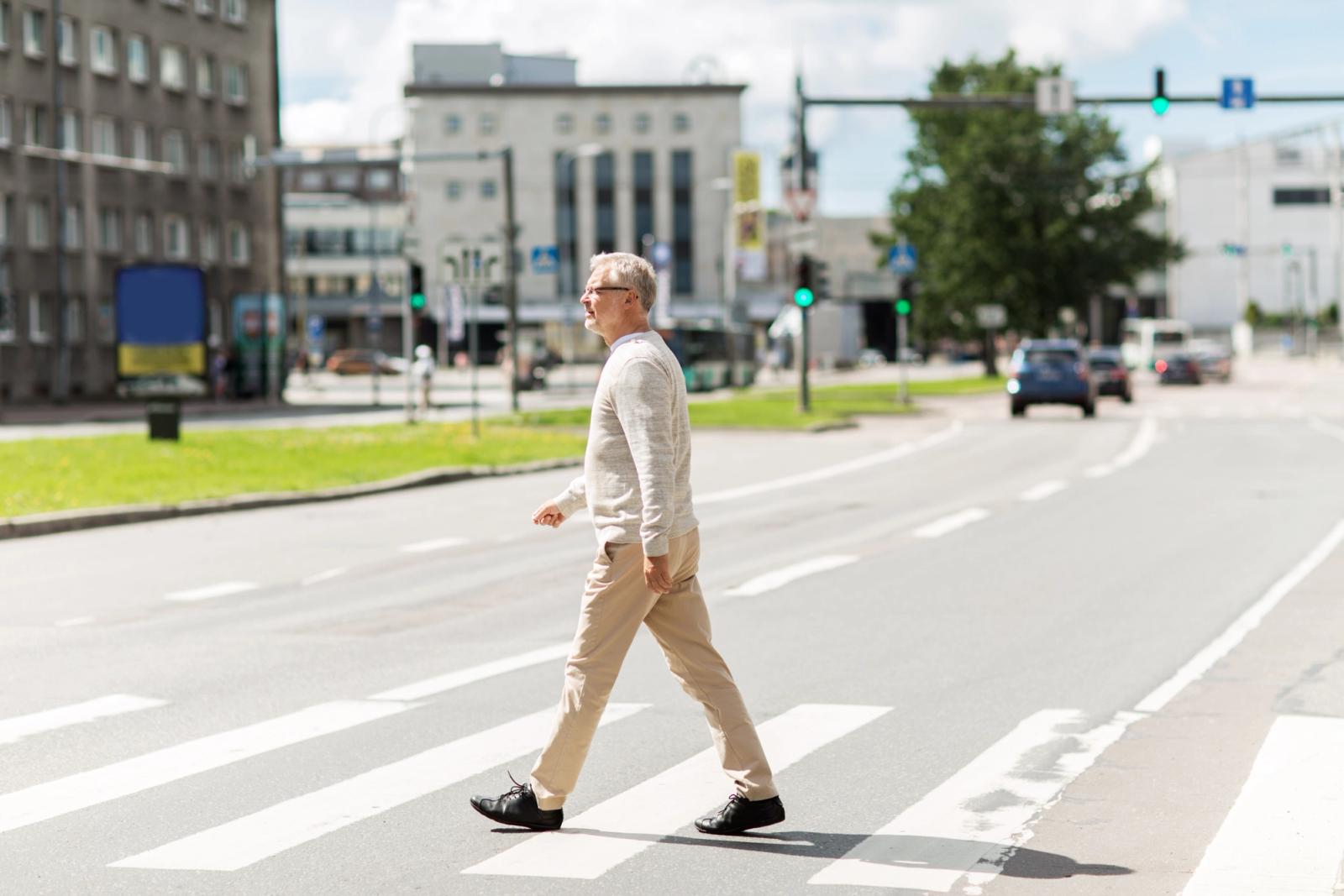
A pooled analysis of 74 studies and 4,227,297 adults split physical activity by where it happens. Leisure-time activity sat alongside a 24 percent lower risk of dementia. Physical work sat alongside a 20 percent higher one. The certainty of that evidence, the authors say, is very low to low.
Across the world, about one hour in eight of all physical activity is done in leisure. Work and housework account for 52 percent of it and commuting for another 36 percent, and in low-income countries the leisure share falls to 4 percent, against 28 percent in rich ones. Almost every study that has asked whether movement protects the brain has measured the eighth.
A systematic review and meta-analysis in The Lancet Public Health has now pooled 74 studies covering 4,227,297 adults in 30 countries, and sorted their activity by where it happened. Taken together, the most active groups had a relative risk of all-cause dementia of 0.80 against the least active. A relative risk is the risk of an event in one group divided by the risk in another, so 1 would mean no difference between them, and the 95 percent confidence interval, the range the data leave plausible, ran from 0.75 to 0.86. That is the familiar finding, and it holds.
Then the domains separate. Leisure-time activity carried a relative risk of 0.76, interval 0.65 to 0.88, and household activity 0.85, interval 0.74 to 0.98. Both sit below 1. Occupational activity carried 1.20, interval 1.01 to 1.42, and commuting 1.10, interval 1.03 to 1.18. Both sit above it. The difference between domains was itself statistically significant, at p equals 0.0004: which domain a person's activity fell into changed the answer rather than merely adding noise around it.
How we know
The review is registered with PROSPERO as CRD420251010899 and reported in line with the PRISMA guidelines, and it was built in two layers. An earlier review by Iso-Markku and colleagues had searched six databases from their inception to October 2021 and found only two studies measuring anything other than total or leisure-time activity. This team replicated that search strategy and its eligibility criteria, carried 57 of those studies forward, then ran a fresh search of the same six databases from 1 January 2021 to 2 May 2026. Of 6,270 records screened, 17 new studies were eligible. One study from the earlier review was dropped for duplicating data with a shorter follow-up, which leaves 74.
A systematic review is a search rather than a summary. Cochrane defines it as an attempt to collate all the empirical evidence fitting pre-specified eligibility criteria, using explicit and reproducible methods chosen to minimise bias, with the question fixed before anyone sees the results; the meta-analysis is the arithmetic layer laid on top of it. The studies gathered here are cohort studies, which follow groups defined by an exposure people already have, and case-control studies, which start from people who have the outcome and work backwards through their histories, usually by recall or records. Together they covered 4,227,297 participants, 2,230,046 women and 1,997,251 men, at a median age of 67.3 years. Over a median follow-up of 10.0 years there were 64,009 cases of dementia, among them 5,859 recorded as Alzheimer's disease and 1,607 as vascular dementia. Both subtypes moved the same way as the total: 0.79 for Alzheimer's disease, interval 0.70 to 0.90, and 0.71 for vascular dementia, interval 0.58 to 0.87.
Forty of the 74 studies, 54 percent, scored moderate or high on the review's quality tool. Sixty-nine of them, 93 percent, were run in high-income countries: 24 in the United States, eight in Finland, seven in Sweden and six in the United Kingdom.
The four domains are not equally evidenced
The word domain conceals a large difference in how much sits behind each figure. Leisure-time activity rested on 20 studies and 33 separate comparisons, covering 596,677 people among whom 12,297 developed dementia. Occupational activity rested on five studies and 13 comparisons, though those five were the best rated in the review, three of them moderate quality and two high, with a median follow-up of 21.0 years. Household activity rested on one study. Commuting rested on two. Between them, the household and commuting estimates draw on three studies in total, the UK Biobank cohort and the Finnish CAIDE study, which is why the authors call that evidence scarce, and why the tight interval on the commuting figure, 1.03 to 1.18, should not be read as a settled one.
Why physical work might look worse
The occupational result is the one that inverts the usual message, and the review spends its discussion on why. Part of the explanation is bookkeeping. Earlier studies that found physical work protective often placed non-working people and those in sedentary jobs together in the low-activity reference group, which loads that group with people who are not working at all, some of them for reasons of health. Nabe-Nielsen and colleagues showed the consequence directly: with that mixed reference group, occupational activity looked protective in both men and women, but restricting the analysis to people who were actually working reversed the association in women and weakened it in men. This review used estimates restricted to working participants wherever they existed, precisely to limit what is called healthy worker bias, the distortion that arises when people well enough to hold a physically demanding job are compared against a group that includes those too unwell to hold any.
The rest of the explanation is context. The authors set out what physically demanding work tends to arrive with: socioeconomic disadvantage, psychosocial stress, limited autonomy over the working day, hazardous exposures, and more air and noise pollution. Of those it is the air and noise pollution they tie to an established dementia link; the rest they give as the adverse life circumstances and working conditions such jobs carry. They add that repetitive, low-complexity manual tasks may limit the accrual of cognitive reserve, which they note is independently linked to dementia risk. And they are explicit about the reading they favour: the association may reflect an accumulation of social, economic and environmental adversity rather than being attributable to occupational physical activity itself, and it should be interpreted through a structural lens, recognising these stressors as drivers of health rather than as traits of the people carrying them.
How firm the evidence is
Not very, and the review says so in its own findings line: certainty of evidence ranged from very low to low across domains. Heterogeneity is the first reason. I2 reached 97.4 percent for all-cause dementia, which means almost all the variation between study results reflects real differences between those studies rather than chance, so the pooled figure is averaging over exposures that are not really the same thing. The second is measurement: most included studies established activity by questionnaire, which is open to faulty recall and to answering as one would prefer to be seen, and the authors note that devices still cannot reliably tell one domain of activity from another. The third is coverage. Ninety-three percent of the evidence comes from high-income countries, while the increase in dementia cases is projected to be steepest in low- and middle-income ones, a mismatch the authors map country by country.
Three further checks are worth reporting in the authors' own terms. A funnel plot and Egger regression showed no sign of publication bias, but a second test for small-study effects did return a significant slope, and the estimate corrected for it came to 0.83, interval 0.78 to 0.88: smaller than the headline figure, pointing the same way. A leave-one-out analysis, which recomputes the pooled estimate with each study removed in turn, held the direction of both the leisure-time and occupational associations throughout, but statistical significance was lost on some exclusions, so the result rests on the full body of evidence rather than surviving any single removal. And reverse causation cannot be excluded. Dementia develops over decades, so early disease can reduce how much a person moves long before anyone diagnoses it, which would produce this pattern with the arrow running backwards. The guard against it is to discard cases arising in the first years of follow-up; among the studies following people for more than 20 years, exactly one reported such an analysis, for leisure-time activity alone, and its result matched the main one. The review's own moderator analysis points the same way, since studies with less than five years of follow-up reported larger protective associations than the longer ones did.
Why it matters
For most people alive, the physical activity in a day is not chosen. It is the job, the housework and the journey to the job. The claim this review makes is that where the movement happens may change what it does to the brain, in a literature that has almost entirely measured the one domain that comfortable people in rich countries control. That is a statement about the evidence base as much as about the body, and it is the more secure of the two.
What the authors take from it is a change in where prevention effort points: towards equitable access to safe spaces for exercise and to enough leisure time to use them, and towards worker-focused policies aimed at the exposures around physically demanding jobs rather than at the movement in them. They also note that the countries where dementia cases are projected to rise fastest are the ones with the fewest studies asking this question at all. Whether physical work carries a risk of its own, or simply travels with everything else that is hard about it, is what this review leaves open. It is not a question that more pooling of the same cohorts can close.
Every study pooled here is observational, so none of it can establish cause, and the authors rate the certainty of the evidence as very low to low across all four domains. The occupational and commuting findings are the weakest part of it: occupational activity rests on five studies, commuting on two and household on one. Physically demanding work travels with socioeconomic disadvantage, psychosocial stress, low job autonomy, and higher exposure to air and noise pollution. The authors link the two pollution exposures to dementia risk and give the rest as the adverse circumstances such work arrives with, and this review cannot separate any of them from the movement itself. Heterogeneity was considerable, at I2 of 97.4 percent for all-cause dementia, and most included studies measured activity by questionnaire rather than by device. Reverse causation is live: dementia develops over decades, early undiagnosed disease can reduce how much a person moves years before any diagnosis, and only one study with more than 20 years of follow-up reported the analysis that guards against it. Studies with less than five years of follow-up reported larger protective associations than longer ones, which is what reverse causation would look like. And 69 of the 74 studies came from high-income countries, while the projected rise in dementia is steepest elsewhere.
Whether changing how much anyone moves changes their risk of dementia. Every study included observed activity that people were already doing, the review excluded experimental studies by design, and the authors note that randomised controlled trials have yet to reproduce the associations these cohorts show. It also does not establish that physical work harms the brain: the authors state plainly that the association may reflect the disadvantage, stress and pollution that accompany such work rather than the work itself. And it does not identify which activities, intensities or occupations are involved, because the pooled studies did not measure activity at that resolution.
Does this show that physical work causes dementia?
No. Every study pooled here is observational, the authors rate the certainty of the evidence as very low to low, and only five studies contributed the occupational figure. The authors themselves say the association may reflect the socioeconomic disadvantage, psychosocial stress and pollution exposure that accompany physically demanding jobs rather than the activity itself.
What does a relative risk of 1.20 actually mean?
It means dementia occurred in the most occupationally active group at 1.20 times the rate in the least active group, once each study's own adjustments had been applied. The 95 percent confidence interval of 1.01 to 1.42 is the range the pooled data leave plausible for that figure, and its lower edge sits close to 1, which is the value that would mean no difference. It is a comparison between groups, not a probability for any individual.
Why is the household finding weaker than it looks?
Because it rests on a single study, and the commuting estimate rests on two. Between them the two domains draw on three studies in total, the UK Biobank cohort and the Finnish CAIDE study, which the authors describe as scarce evidence that cannot support a dose-response analysis. A narrow confidence interval computed from two studies reflects agreement between those two, not the weight of a literature.
Was there a dose-response pattern for leisure-time activity?
Yes. The dose-response meta-analysis found a non-linear inverse association between leisure-time activity and all-cause dementia, with the test for non-linearity at p below 0.0001, and the association flattening out beyond a certain level of activity rather than continuing to fall. Occupational activity was also modelled, but with limited exposure categories available across the five contributing studies.
This is research reporting, not medical advice. We describe what studies found. We never tell you what to do. Talk to a doctor before changing anything about your health. Read our full position.
The evidence, read properly, every three days.
We read the paper so you do not have to. Free, and no supplement ads, ever.
Powered by Buttondown