LatAm-FINGERS ran a structured lifestyle programme against plain health advice in 1,065 older adults across 11 Latin American countries. The structured group improved more. The advice group improved too, and that is the number worth looking at.
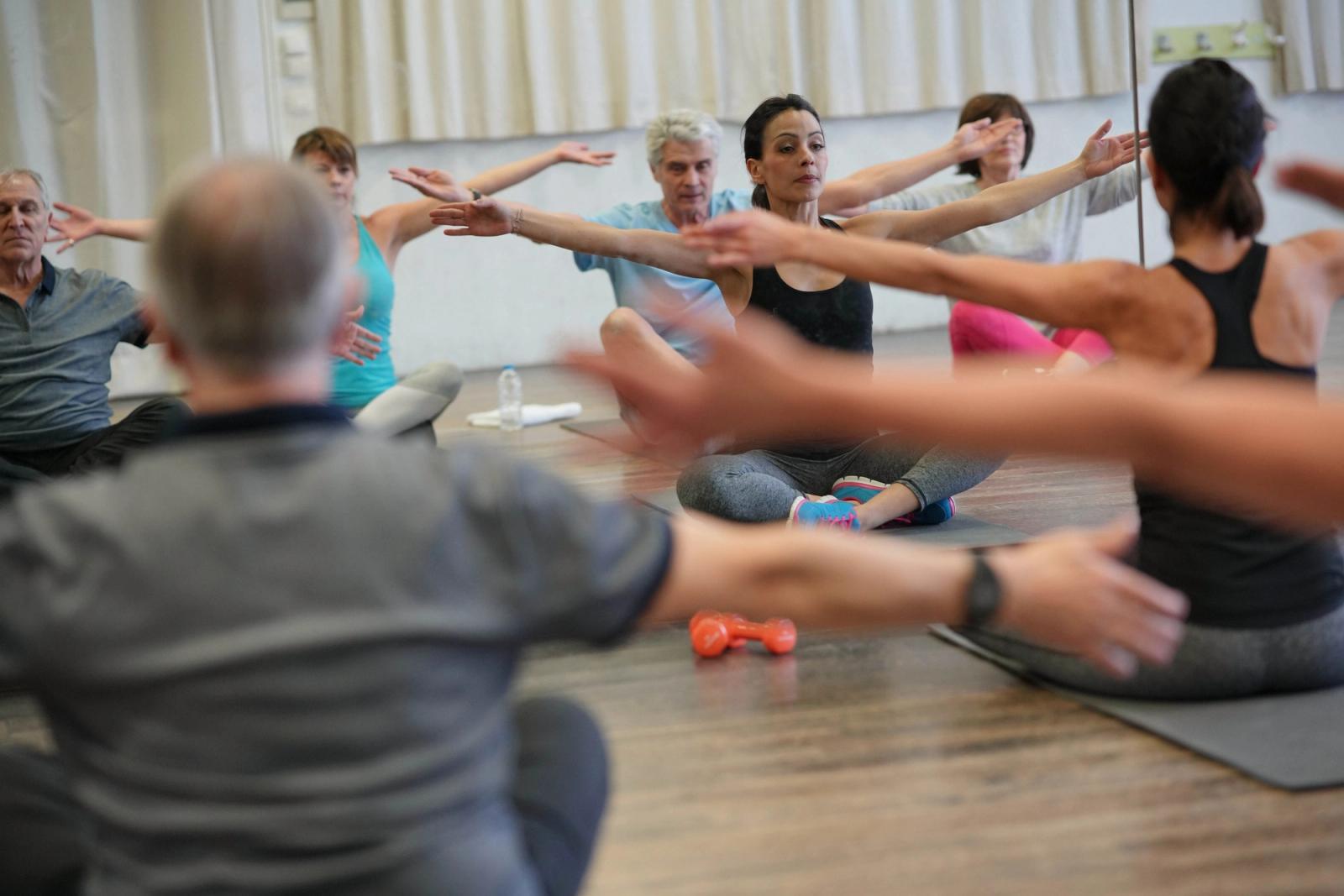
Between October 2021 and July 2023, 1,065 people aged 60 to 77 enrolled across 11 Latin American countries, from Mexico to Uruguay, in a trial that asked them to spend two years changing how they lived. Half were assigned to a structured programme: supervised exercise, dietary guidance, computerised brain training, group activity and regular management of blood pressure and other cardiovascular risks. The other half were given health advice and left to act on it as they saw fit. Two years later, both halves were scoring better on the same cognitive tests than when they started.
That last sentence is the one worth sitting with. The structured group's global cognitive composite, a single score built from tests of memory, executive function and processing speed, rose by 0.31 standard deviations a year, a standard deviation being a measure of how widely the individual scores are spread. The 95 percent confidence interval ran from 0.28 to 0.34. The advice group rose by 0.20 a year, interval 0.17 to 0.23. The distance between the two was 0.11 a year, interval 0.06 to 0.15, and that distance is what the coverage rendered as a 55 percent greater improvement in global cognition.
The 55 percent is arithmetically correct. It is also relative: 0.31 is about 55 percent more than 0.20. It carries no information about how large either figure is, and it quietly drops the fact that the smaller one belongs to a group that also got better.
How we know
LatAm-FINGERS was a single blind, multicentre randomised controlled trial run in Argentina, Bolivia, Brazil, Chile, Colombia, Costa Rica, the Dominican Republic, Ecuador, Mexico, Peru and Uruguay, registered as NCT06492967. Of 1,719 people assessed, 1,065 were randomly assigned, 539 to the structured arm and 526 to the flexible one, in blocks of eight stratified by study centre. To qualify, a participant had to be aged 60 to 77, score at least 6 on a dementia risk score built from cardiovascular risk factors and age, and be performing below par on cognitive testing. Mean age was 67.5 years, and 795 of the 1,065, or 75 percent, were women.
Single blind here means the participants and the staff delivering the sessions knew which group they were in, which is unavoidable when the treatment is an exercise class, while the people who administered and scored the cognitive tests did not. 877 of the 1,065, or 82.3 percent, completed the full two years. Dropouts were higher in the advice group than the structured one, 20.2 percent against 15.2 percent, which the authors report as distinguishable from chance at p equals 0.042. Recruitment reached 62.0 percent on the trial's own measure, and average adherence in the structured group was 71.6 percent across the two years.
Feasibility was half the point
The trial had two primary outcomes and only one of them is a cognitive score. The other was whether a programme like this could be run at all across 11 countries with different health systems, diets, languages and incomes. That was measured on the RE-AIM framework, which tracks how many of the people a trial approaches it actually recruits, how faithfully the programme is delivered, and how much outcome data survives to the end. Complete cognitive data ran from 87.9 percent at six months to 84.8 percent at 24 months in the structured group, and from 86.3 percent to 79.8 percent in the advice group. Those figures are the trial's answer to its own first question, and they are the ones a health ministry would read first.
Why both groups improved
There is a mundane explanation for scores rising in both arms that has nothing to do with either programme: people get better at cognitive tests by sitting them repeatedly, and these participants sat them at six, 12, 18 and 24 months. Nothing in the design separates that from a real gain, because there was no arm that did nothing at all. The comparison group was not untreated. It received health advice, so the 0.11 is the distance between a supervised programme and a lighter touch, not between doing something and doing nothing.
That choice was defensible. Withholding advice for two years from people known to be at high risk of dementia would be hard to justify. But it changes what the headline number means. A reader who takes 55 percent greater improvement as the measured value of exercising and eating well is reading it against a baseline of inaction the trial never tested.
What the programme cost the people in it
478 adverse events were reported across the trial, 412 in the structured group and 66 in the advice group. Musculoskeletal symptoms accounted for 113 of them in the structured group against 13 in the advice group, and upper respiratory infections for 50 against one. Serious adverse events occurred in 50 participants in the structured group, 9 percent, and 24 in the advice group, 5 percent, and the investigators judged none of them related to the intervention. There were eight deaths, three in the structured group and five in the advice group, again none judged related. Supervised exercise for people aged 60 to 77 produces sore joints, and the trial's own safety table shows it.
Why it matters
Most large dementia prevention trials have been run in high income countries, and the paper's own framing is that Latin American populations remain under-represented in this research while the region carries a heavy dementia burden. LatAm-FINGERS is the region's first trial of this kind, part of the World Wide FINGERS network that grew out of the original Finnish FINGER trial. What it establishes most solidly is that the thing can be done: recruited, adapted to local food and habits, and held together across 11 countries for two years with four in five participants staying to the end. The version of record appeared in the Lancet issue of 1 August 2026, after the paper went online on 13 July and was presented at the Alzheimer's Association International Conference in London.
What it does not establish is that anyone avoided dementia. The outcome is a composite test score measured over two years, and a difference of 0.11 standard deviations a year has no agreed translation into a diagnosis deferred. That is not a criticism of the trial, whose authors describe the finding as extending the evidence base to populations this research has left out rather than as evidence that dementia was prevented. It is a caution about the distance between what was measured and what a reader hopes was measured. The question that would settle it is whether these two trajectories turn into different rates of diagnosis, and answering that takes a longer trial than this one.
Nobody in this trial was followed to a dementia diagnosis. The outcome is a score on a battery of cognitive tests, and a gap of 0.11 standard deviations a year has no agreed translation into whether a person develops dementia, or when. Both groups improved, so some of the rise in each is people getting better at tests they sat four times, and the design cannot separate that from the programmes. The comparison group received health advice rather than nothing, which makes the headline gap a comparison of two active approaches. Participants and the staff running the sessions knew which group they were in; only the assessors were masked. And the structured group reported 412 adverse events against the advice group's 66, mostly musculoskeletal, which is what supervised exercise in people aged 60 to 77 produces.
Whether the programme prevents or delays dementia. It measured cognitive test scores over two years and followed nobody to a diagnosis, so it cannot say. It also cannot say which part of the programme did the work, because exercise, diet, cognitive training, group activity and cardiovascular management were delivered together and never tested separately. And it says nothing about people outside its own entry criteria, since everyone enrolled already had cardiovascular risk factors, a dementia risk score of at least 6 and below par cognitive scores.
Did the programme prevent dementia?
The trial did not test that. It measured how cognitive test scores moved over two years and followed nobody to a diagnosis. Its own interpretation claims greater cognitive improvement than a flexible health advice programme, and nothing beyond that.
What does a gap of 0.11 standard deviations a year actually mean?
It is a difference in how fast a combined cognitive test score moved, expressed relative to how widely those scores are spread across the group. The trial reports it with a confidence interval of 0.06 to 0.15 and does not translate it into any clinical outcome. There is no established conversion from that figure to a risk of dementia.
Why did the comparison group improve as well?
That group was not untreated: it received health advice throughout the two years. Both groups also sat the same cognitive tests four times, and people tend to score better on a test they have taken before. The trial has no untreated arm, so it cannot separate those two explanations.
Is a 55 percent greater improvement the same as 55 percent better cognition?
No. It is the ratio of two annual rates of change, 0.31 against 0.20, so it describes the difference between the groups rather than the size of either gain. Both figures are small movements on a composite test score.
- The Lancet, Multidomain lifestyle intervention for the prevention of cognitive decline in at-risk older adults in Latin America (LatAm-FINGERS): a single-blind, multicentre, randomised controlled trial Primary
- Alzheimer Europe, LatAm-FINGERS trial reports cognitive benefits from a lifestyle intervention adapted for Latin American populations
This is research reporting, not medical advice. We describe what studies found. We never tell you what to do. Talk to a doctor before changing anything about your health. Read our full position.
The evidence, read properly, every three days.
We read the paper so you do not have to. Free, and no supplement ads, ever.
Powered by Buttondown